Description
Interested in this property? Sign up for mySherryFitz to arrange your viewing, see current offers, or make your own offer. Register now at SherryFitz.ie.
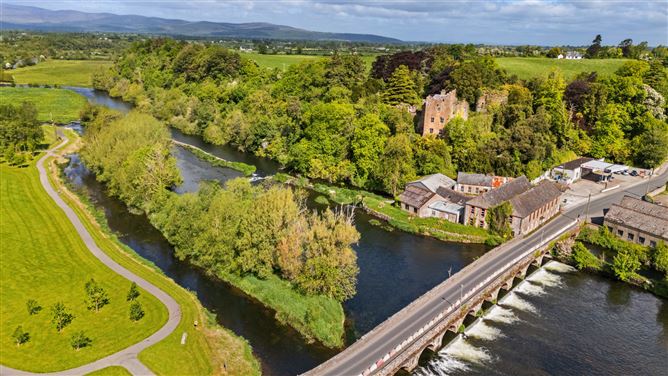
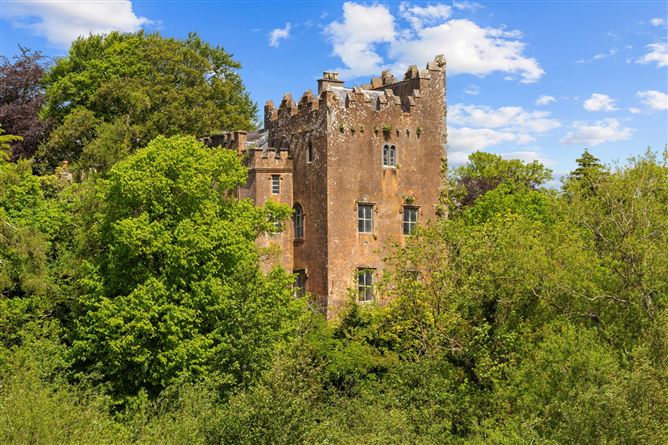
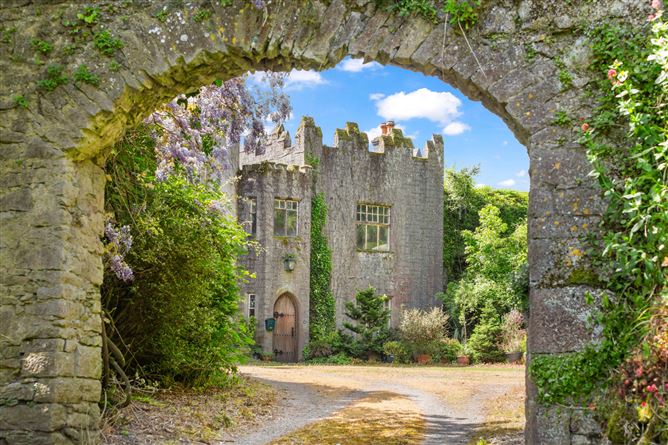
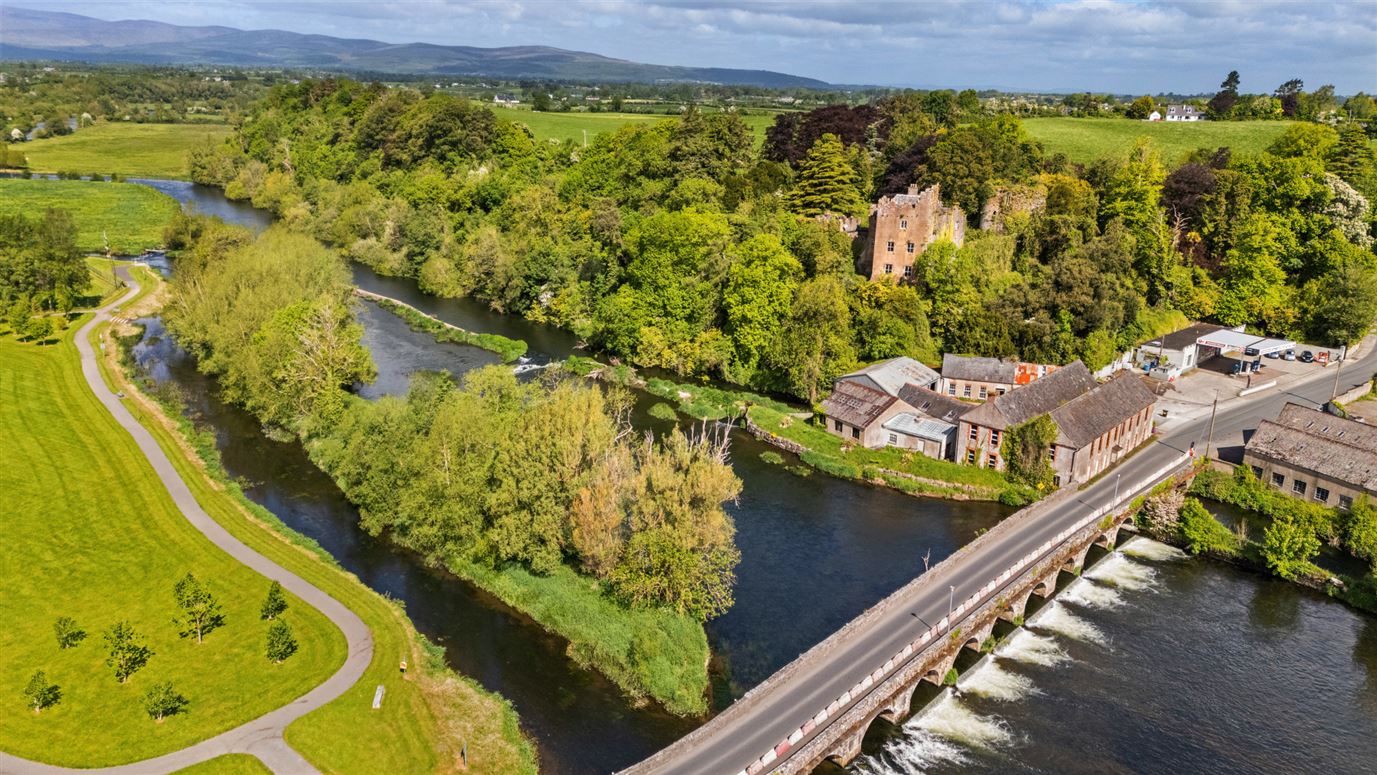
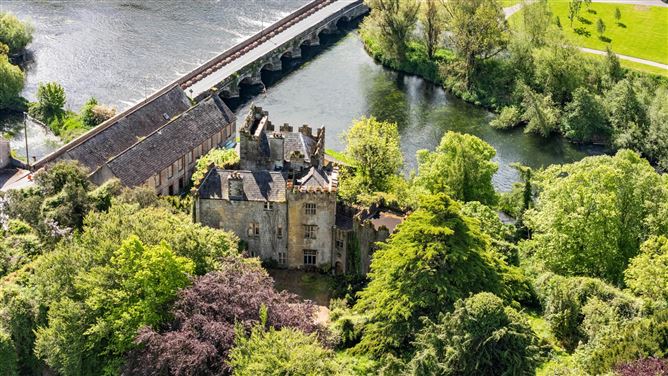
ARDFINNAN CASTLE IS A HISTORIC NORMAN PROPERTY IN COUNTY TIPPERARY, IRELAND, SET ON THE RIVER SUIR. THE ESTATE EXTENDS TO APPROX. 6.95 HECTARES (17.17 ACRES) AND INCLUDES FISHING RIGHTS ON BOTH BANKS OF THE RIVER SUIR AND A RIVER ISLAND, WITH A FIVE-BEDROOM RESIDENCE.
SPECIAL FEATURES
• Ardfinnan was commissioned by Earl of
Moreton (later King John) in 1185 as one
of three castles(sisters are Lismore and
Tybroughney) in his bid to conquer Munster
• Substantial private estate extending to approx.
6.95 hectares (17.17 acres)
• Exclusive fishing rights along both banks of
the River Suir, including rights over a central
river island
• Commanding elevated position overlooking
the Suir valley with panoramic countryside
views
• Significant medieval architectural fabric,
including fortified entrance gateway and
corner towers within a parallelogram plan
• Early 13th-century circular keep, attributed to
the Knights Hospitaller, forming one of the
castle's most significant surviving defensive
features, with the original vaulted ceiling at
ground-floor level remaining intact.
• Rich layered history of occupation, including
Anglo-Norman lords, monastic military
orders, Cromwellian siege and later Victorian
restoration
• Later 19th20th century adaptations,
including conversion to country house use and
subsequent restoration phases
• Rare combination of fortified castle and
domestic residence, retaining strong defensive
character while offering habitable interiors
DESCRIPTION
Ardfinnan Castle is a historic Anglo-Norman stronghold and later country residence, originally founded circa 1185 on the orders of John of England, then Lord of Ireland. It was established to secure a strategic crossing of the River Suir and to control movement between the south-eastern seaboard and the Irish midlands. Positioned on a dramatic rocky incline above the Suir valley, the castle commands far-reaching views toward the Knockmealdown Mountains to the south and the Galtee Mountains to the northwest.
The estate extends to approximately 6.95 hectares (17.17 acres) and includes exclusive fishing rights along both banks of the River Suir, together with rights extending to an island within the river, forming a historically significant private fishery long associated with the property.
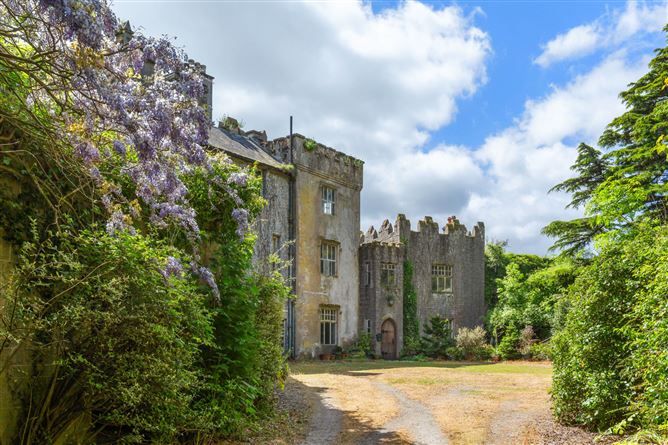
Architecturally, the castle is broadly parallelogram in plan, with square corner battlements and a fortified entrance gateway. Its medieval fabric has evolved over centuries of occupation, reflecting successive phases of military, monastic and residential use. The surviving circular keep is attributed to the Knights Hospitaller in the early 13th century, when the structure was strengthened during periods of regional instability.
The castle's early history reflects the turbulence of the Anglo-Norman invasion period, passing through successive Norman lords and associations with both the Knights Templar and Knights Hospitaller. In 1650, during the Cromwellian conquest of Ireland, the castle was besieged and captured by Parliamentarian forces under Henry Ireton following artillery bombardment, after which it was partially slighted and left in ruin.
In the late 18th century the castle was reoccupied as a British military garrison and training camp during a period of invasion fears, remaining in use until the early 19th century. The estate was later restored to descendants of the de Prendergast family and underwent Victorian refurbishment, with further additions adapting the castle into a country residence while retaining its fortified medieval character.
Today the residence is arranged in a five-bedroom configuration across multiple levels. The ground floor comprises an entrance hall, living room, utility room, kitchen and drawing room with open fireplace overlooking the River Suir. The first floor includes two bedrooms, a bathroom, and a substantial reception room with views across the river and village.
The second floor provides further bedroom accommodation and retains significant historic character, including the principal upper bedroom traditionally known as King John's Room, situated above the drawing room. Local tradition holds that John is reputed to have sat on the deep stone window seats here while observing construction at Ardfinnan Bridge. The room retains its Portland stone fireplace and forms one of the most evocative spaces within the castle. This upper level now requires restoration, with a programme of conservation works already undertaken including roof repairs over King John's Room and the adjoining pitch-pine-lined bedroom at the end of the corridor.
Recent conservation-led works have included specialist treatment of historic timber affected by dry rot, with sections of flooring carefully lifted as part of the restoration process. Additional maintenance to the principal roof coverings, including inspection of tiles and leadwork, together with clearance of gutters and hopper heads, has also been carried out, helping to safeguard the structure while preserving its historic integrity.
The property later passed through industrial-era ownership connected with local woollen mills before further restoration in the early 20th century. It has remained in the same family ownership since 1919. Today, Ardfinnan Castle represents over eight centuries of continuous occupation, combining medieval fortification with later domestic adaptation in a rare and remarkable private residence of exceptional architectural and historical significance.
GARDENS & GROUNDS
The gardens of Ardfinnan Castle form part of a wider private estate extending to approximately 6.95 hectares (17.17 acres). Set around the castle on a rocky slope above the River Suir, they comprise informal lawns and established grounds that follow the natural topography of the site. Mature trees and mature planting soften the historic stonework, creating sheltered outdoor areas within the fortified footprint. Elevated sections of the grounds provide open views over the river corridor, while more enclosed garden spaces sit closer to the castle walls, offering privacy and contrast in scale. The overall landscape reflects a long-evolved setting where managed gardens blend seamlessly with the surrounding estate and the castle's defensive medieval character.
LOCATION
Ardfinnan Castle is located in Ardfinnan village in County Tipperary, Ireland, within the Suir Valley in the south-east of the country. The property occupies an elevated position on a rocky slope above the River Suir, approximately 450 metres from Ardfinnan Village, around 8.7 km from Cahir, about 15.5 km from Clonmel, roughly 62.5 km from Waterford City, and approximately 91 km from Cork Airport (around a 1-hour drive). It lies within a rural agricultural landscape defined by the River Suir corridor, while benefiting from close proximity to key regional towns and transport connections. Cahir, located nearby, provides direct access to the M8 motorway, linking the area efficiently with Cork, Dublin, and the wider national road network. The castle historically occupied a strategically important river crossing point, connecting inland Munster with key southern and south-eastern routes.
TECHNICAL INFORMATION
SERVICES | Mains electricity, mains water, mains sewage, oil central heating (currently not in use), oil AGA
SALE METHOD | Private Treaty.
TENURE & POSSESSION | The property is offered for sale freehold with vacant possession being given at the closing of sale.
VIEWING | Strictly By Private Appointment BER Details
Negotiator